










Is a Shift To Install Base Key to 2025 Success?

As they close the last of their Q1 deals, many SaaS sales teams are getting anxious. While sales in any environment is always difficult, 2025 has brought a lot of economic uncertainty, market volatility, and a cautious buyer landscape – making new logo acuisition particularly tough.
Recognizing that sales to the install base are generally faster and less expensive than new logo ones, many CROs are heading into their board meetings prepared to shift the focus of their annual plan – which was just signed off on 90 days ago – to one that emphasizes cross sell and upsell as a means to deliver their total growth and EBITDA goals.
This article provides a framework for making a shift towards install base revenue and offering actionable advice for communicating it with the Board.
New Logo Accounts: Lagging Enthususiasm
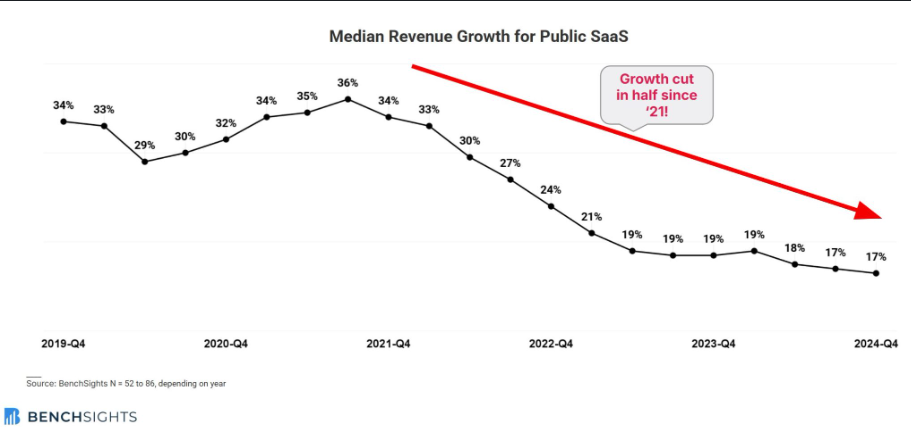
Post-COVID, everyone was looking for green shoots of optimism from theri sales teams. And public company SaaS results showed something to cheer – they had 17% year over year growth, on average.
Yet a BenchSites study shows another, uncomfortable truth – this growth rate is down from 36% at the end of 2021, and has been steadily declining each quarter.
CROs cite many factors – but risk aversion among potential customers is a consistent learder on their lists. Uncertainty about US policy (tarrifs, taxes, trading partners), is leading to longer sales cycles as buyers scrutinize every expenditure, delay decisions, and demand greater ROI.
The impact of missed new logo targets on overall revenue goals is undeniable. Boards are keenly aware of the importance of consistent growth, and any deviation from projected figures will raise concerns. CROs must be prepared to address these concerns with transparency and a data-driven analysis of the root causes.
Install Base Accounts: Potential Fast Movers
In the face of these challenges, many are turning to the install base to fill the gap. Existing customers, already familiar with the value of your solution, offer higher conversion rates, lower customer acquisition costs (CAC), and increased customer lifetime value (CLTV). And even if they’re not buying additional users or modules, there are some opportunites at time of renewal that can grow revenue from the account.
You’ll want to familiarize yourself with the terms of their existing contract, and use the renewal to modify it to bake in growth. You’ll want to:
-
Prioritize multi-year contracts: Aim for contract terms of three to five years to reduce the effort of annual renewals.
- Strategize price increases: Pre-negotiate price increases within contracts, either a flat percentage each year, or tied to CPI.
-
Implement automatic renewals: Include terms for automatic renewal to further streamline the renewal process
- Make cancellation require effort: Acccept contract cancellation only in writing, and not within 90 days of the renewal term to increase your chances of winning anouther year.
-
Monitor user counts: If your SaaS solution is sold per user, implement systems to track and bill for user count fluctuations throughout the year, not just at renewal time.
At the same time, it’s important to monitor the health of your accounts – as an unhappy customer who got locked into an additional year of service will absolutely churn the following year if their issues aren’t addressed. While you’re assessing each customer, it’s also helpful to map out whitespace in the account (moduels, features, and servie levels they haven’t yet licensed) to start introduicng upsell products (while monitoring untapped users and divisions of your existing install base for expansion sales).
All of these strategies require data, which you can analyze to create a personalized outreach plan.
At a minimum, be sure you’re tracking:
-
Renewal dates
-
Contracted price increases
-
Customer satisfaction levels
-
Renewal terms (single or multi-year)
Use these data to prioritize renewal negotiations, identify opportunities for price increases, and develop targeted strategies for different customer segments.
The Q1 2025 board meeting presents a crucial opportunity for CROs to reset expectations, while not undermining confidence in a shifting strategy. Heading into those meeting, you’ll want to:
-
Address Missed Revenue Targets (if applicable):
-
Transparency and honesty are paramount. Acknowledge the challenges faced and provide a detailed analysis of the root causes of the shortfall.
-
Present a revised forecast that reflects the current market realities and a clear action plan for achieving revised goals.
-
-
Highlight Install Base Success:
-
Showcase metrics that demonstrate the impact of install base strategies, such as cross-sell and upsell revenue growth, net revenue retention (NRR), and customer lifetime value (CLTV).
-
Present case studies of successful install base initiatives, highlighting the strategies used and the results achieved.
-
Demonstrate how these successes are contributing to overall revenue goals and mitigating the impact of new logo challenges.
-
-
Proactive Communication and Strategic Adjustments:
-
Present a clear plan for optimizing install base revenue, outlining investments in customer success, product development, and sales enablement.
-
Address any changes to sales compensation plans, ensuring alignment with the focus on install base revenue.
-
Show how the company is adapting to the economic climate.
-
-
Prepare for Difficult Questions:
-
Anticipate and prepare for challenging questions from board members, such as:
- What changed over the last 90 days to shift focus from new logo growth to install base sales as a strategy?
- What are the long-term effects of this strategy?
- How will the company return to new logo growth?
- What are the risks of over-reliance on the install base?
- How are the sales and customer success teams being aligned?
-
Provide data-driven answers and demonstrate a clear understanding of the company’s strategic direction.
-
To further prepare for board meetings, CROs should make sure they’re alinged with the rest of their c-team on answers to these strategic questions – and use personal relationships with Board members to socialize the changes before the meeting begins.
In Conclusion
Changing strategy this early in the year is never ideal, as it signals a deviation from the initial plan and can raise questions about the foresight of strategy setters just 3 months ago. However, it’s better than stubbornly adhering to a failing plan in the face of significant market headwinds and missing critical growth targets. Communicating the rationale for the change, and then exceeding your new expectations should help navigate this delicate shift of focus.
For more tactical, practical advice and on this and other topics for the modern CRO, please see my new book: The CRO’s Guide to Winning in Private Equity – now a bestseller in Sales and Strategy.