
























Why Sales Die from ‘No Decision’
The number one loss reason in sales is not the deal that goes to a competitor, it is “no decision.”
I have long argued and written that this stems from the following:
- Lack of buyer requirements
- Lack of buyer knowledge
- Lack of seller knowledge
- Lack of qualification
- Lack of discovery.
To underscore just how universal this problem is, I want to share my own recent, real-world example. If you think the process of buying a new truck doesn’t compare to selling your complex B2B solution, I assure you, the parallels are too strong to ignore.
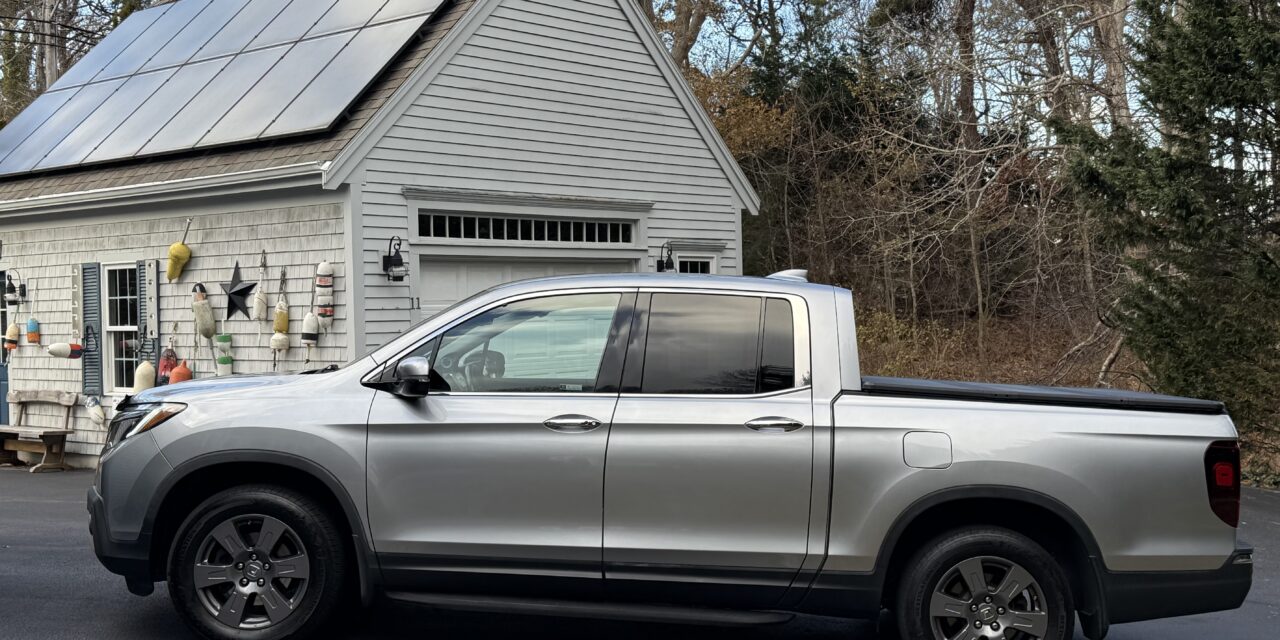
A few months ago, I decided it was time to replace my seemingly perfectly good truck. My compelling reasons were minimal: it was sometimes too small for my cargo, some electronics were glitchy, and, frankly, I was bored. There was no critical pain point driving the decision.
In the past, my vehicle purchases were easy; I knew exactly what I wanted right down to the color. The salesperson was minimized—it was a simple transaction based on price and availability.
This time was different. I was wide open. I didn’t know the make or model I wanted, and my budget was flexible. I was prepared to trade in my current vehicle and spend a significant additional sum for the right truck, whatever that was.
My message to each dealer was identical: “I need to drive several trucks to decide which one suits me best. Once we find it, we can close the deal immediately.”
Over several weeks, I visited five dealerships (six counting a return visit) and drove ten or eleven trucks. The results were a masterclass in how to lose a qualified, motivated buyer.
One dealer advertised a vehicle that when I arrived lacked the very features I desired. The ad was wrong and they had no idea because no one had taken the time to learn their inventory. It was also interesting that this dealer paid salary and no commissions to their salespeople. They worked as a team. It had benefits in that the conversation was more relaxed and even had me on the brink of spending 100% more than planned. However, there was no urgency or admittedly any care as to whether or not I bought anything. Some customers may love that lack of pressure, however by taking away the financial incentive you also may remove the urgency to drive revenue for your business ( think about the big salaries we pay salespeople today and the potential correlation to years of low quota performance ).
Here is a breakdown of what I experienced compared to what every sales team should be doing to reduce the potential of no decision:
| Sales Best Practice | My Dealership Experience |
| Deep Discovery: Understanding the why—the pain, the desired outcome. | No one asked why I wanted a new truck, what I liked/disliked about my current one, or what problem I was trying to solve. |
| Comprehensive Qualification (The 4 W’s): Why change? Who? What is the real timeline? | Qualification was limited to: “Do you have a trade-in?” and taking a picture of my driver’s license. Only one salesperson asked about my driving use (e.g.,off-road, trailering, snowplowing). |
| Product Expertise: Knowing the features, specs, and potential pitfalls. | Only one salesperson knew the specifics of the truck I was testing. I later discovered a truck I liked required premium fuel (a $100/month surprise) and had 10+ recalls—information I had to find myself using an AI tool and my own personal experts outside of the dealership |
| Consistent Follow-Up & Engagement: Nurturing the prospect through the decision journey. | Not one dealer followed up with me after the visit to check on the experience, offer alternatives, or discuss pricing. |
| Value-Driven Negotiation: Proposing a deal that reflects the value of the solution. | The one standout truck I was ready to buy was derailed by a Manager who, after a trade-in evaluation, dropped my keys on the desk and walked away without so much as an acknowledgement of me as a buyer, presenting a proposal that exceeded the sticker price of the new truck. |
The unplanned result was that I went to five dealerships with a loose budget and an immediate purchase intention and in the end I did nothing.
I kept my truck. Why? Because I had no compelling pain point. The inconvenience and frustration I was experiencing were minimal. The pain of change was greater than the cost and pain of staying the same. Since no salesperson effectively created urgency or articulated the value of making a change, I simply maintained the status quo.
Ultimately, I cured my “boredom” by taking a portion of my intended spend and buying a companion vehicle online from a dealer 1,200 miles away—a process that was easy, efficient, and cost-effective.
My truck-buying journey perfectly mirrors what our B2B buyers experience every day, both with our competition and, too often, with us. A potential buyer with a need—even a soft, unquantified one—walks away because the sales team failed to connect the dots between the problem and the solution.
This is the antidote to the “no decision” loss:
- Be a Knowledge Expert: Know your product, your market, and your unique value proposition inside and out. This knowledge aligns you with the buyer and helps you assess genuine fit.
- Qualify Deeply: Understand why they need to change, who is driving the decision, and when the new solution must be implemented (My 4 W’s).
- Conduct Thorough Discovery: Start with problem identification (like the Gap Selling Problem Identification Chart) to understand the gap between their current situation and their desired outcome.
- Articulate Value: Fully grasp the value drivers and the hoped-for outcome for all stakeholders.
- Follow Up: Maintain engagement at every stage and with every involved constituent.
Skip any of these steps, and you dramatically increase your probability of getting a “no decision” instead of a win. Review your own performance or your team’s processes. Do you see the parallels with my failed truck-buying experience?
In a world increasingly driven by AI and accessible information, remember this: I had more accurate, crucial information (fuel requirements, recalls) on the product than the person paid to sell it. Experience and knowledge combined are required to not lose your job to AI—or to lose a deal to apathy.