
























When Managers Aren’t Coaches: Why Bandwidth and Expertise Gaps Quietly Hold Reps Back

Not every sales manager is a coach.
And that’s not a criticism. It’s a reality.
Most managers didn’t come up through enablement. They were top performers, promoted because they knew how to close. And now, in a different role, they’re expected to lead a team, hit a number, join exec calls, unblock deals, forecast weekly, and somehow coach their reps. All in the same week.
It’s no surprise that coaching often takes a back seat.
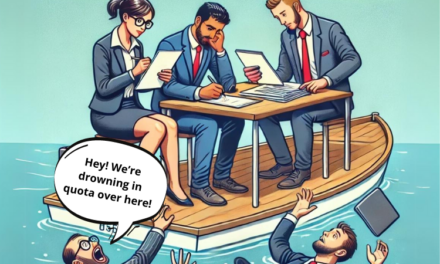
But the cost of that gap doesn’t show up in spreadsheets. It shows up in rep confidence, in slow ramp times, in missed signals during discovery, and in deals that stall without clear next steps. These are the invisible leaks that most teams don’t know how to fix — because no one’s looking closely enough.
Coaching Is Not the Same as Managing
Managing is about outcomes.
Coaching is about inputs.
When a deal is slipping, a manager might jump in to save it. That’s management. But coaching is helping a rep understand why it slipped, and how to prevent it next time.
That requires space. It requires subject matter depth. And it requires reps feeling like they can ask, reflect, and try again without being judged.
But here’s what often happens instead:
-
Coaching gets pushed to rushed Friday 1:1s
-
Feedback stays surface-level (“ask better questions next time”)
-
The reps who seem “fine” get the least attention
-
And the new reps, who need structure, get conflicting advice depending on who’s available
The intention is there. The consistency isn’t.
The Hidden Challenge: Knowledge Gaps
Even when managers do find time to coach, there’s another problem no one likes to talk about: expertise.
You can be a great manager and still not know how to coach someone through every nuance of a MEDDPICC deep-dive. Or how to run a layered discovery across five buying personas. Or how to teach objection handling in a highly regulated industry.
And that’s okay.
Because leadership is not about knowing everything — it’s about building systems that support the team where you can’t.
That’s where modern tools — especially AI-powered ones — are starting to make a real difference.
Where AI Can Fill the Gaps
AI doesn’t replace good coaching. But it does something just as important: it removes the dependency.
It creates a space where reps can:
-
Practise tough conversations without waiting for a manager
-
Get nudged after weak discovery moments
-
Understand where their process breaks down
-
Learn techniques from a broader knowledge base than any one person can hold
It also gives managers structure — clear visibility into rep performance, consistency across teams, and the confidence to coach without second-guessing themselves.
Instead of starting from scratch in every 1:1, managers can show up with context. They know where to go deeper. They know which reps are stuck. And they know who needs support before it becomes a performance issue.
Let Managers Be Leaders — Not Oracles
Sales teams work best when every rep knows they’re not alone. When feedback doesn’t depend on someone else’s availability or memory. When skill development is baked into the workflow, not saved for when the quarter slows down.
Coaching shouldn’t be a luxury.
It should be a layer built into the way teams work.
And if managers are stretched — which they often are — AI can act as that extra layer.
So that every rep keeps learning.
And every manager gets to lead — without burning out.