

























The Silent Killer in Your Sales Org: What Performance Drift Really Looks Like
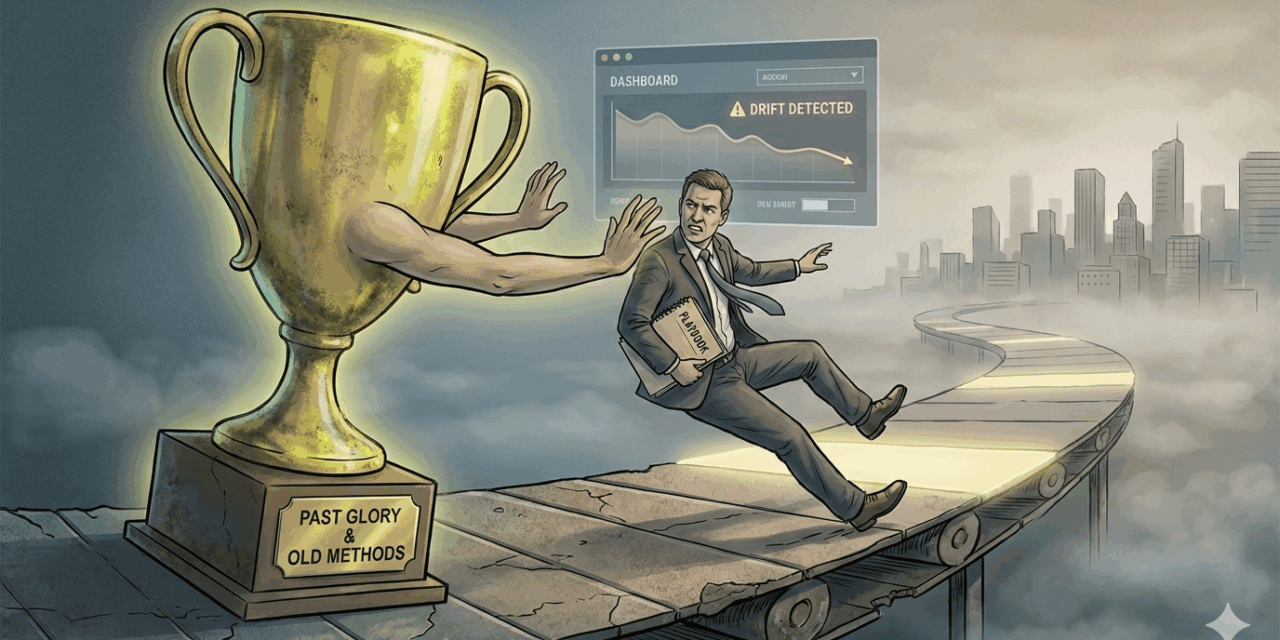
Sometimes, sales teams don’t miss target because they’re lazy or inexperienced. They miss because the way they’re selling quietly stops working, and no one notices until it’s too late.
That’s performance drift.
It’s not a loud collapse. It’s slow erosion. A steady gap between what the playbook says should work and what’s actually happening on the ground. Over time, that gap gets wider. And while the forecasts still look hopeful, the deals don’t close. Pipeline gets stuck. Confidence dips. And leaders are left scratching their heads, wondering what went wrong.
The scary bit? Most of the time, drift doesn’t show up in your dashboards. Not until it’s already done the damage.
What Drift Really Feels Like
You’ll hear it in the little things.
A rep following discovery questions that feel more like a checklist than a conversation.
A manager coaching off a script that hasn’t been updated in six quarters.
A proposal sent that no longer reflects how customers are actually buying.
No one’s doing anything “wrong.” But everyone is slightly off course. And that’s how drift takes hold — not through big mistakes, but through small misalignments that compound over time.
Why It Happens
Drift usually creeps in when there’s a mismatch between the field and the framework.
Maybe the ICP has shifted but personas haven’t been revisited.
Maybe competitors are running circles with a better pricing model and reps don’t know how to respond.
Maybe the sales stages still reflect a linear cycle, but your buyers are anything but linear now.
Meanwhile, the team keeps running the same plays, expecting the same results. But things have changed. The buyer has changed. The market has changed. The product may have changed.
The playbook hasn’t.
What It Costs You
When performance drift sets in, the hit to the number is just the surface.
What it really does is wear down morale.
It makes reps feel like they’re trying hard but going nowhere.
It makes managers feel like they’re coaching in the dark.
And it erodes leadership credibility when plans don’t deliver.
You get forecast misses, missed hiring triggers, bad boardroom conversations. And it all started with a slow drift no one spotted early.
How to Catch It Early
You don’t fix drift by running more pipeline reviews or adding more tools.
You fix it by staying close to the floor.
By listening to real calls.
By stress-testing your methodology against what’s actually happening in the field.
The teams that beat drift are the ones that make feedback loops tight and ongoing — not just during quarterly reviews.
-
They shadow reps often.
-
They update battle cards with input from deals that were won (and lost).
-
They create space for reps to share what’s changing in the market — not just what’s in CRM.
-
They use data not just for reporting, but for reflection.
Where AI Can Help
AI doesn’t stop drift on its own. But it can surface it.
With the right setup, you can spot patterns before they become problems:
-
Keywords that show up more in deals that stall
-
Talk tracks that get low response rates across the board
-
Reps skipping certain parts of the methodology consistently
-
Managers giving generic feedback that doesn’t map to rep behaviour
AI gives you the early signals. It’s up to humans to act on them.
Drift Isn’t a Sign of Failure. It’s a Sign of Movement.
Selling today isn’t static. So even the best teams will drift over time. That’s not the issue.
The issue is when teams don’t recalibrate. When they expect outdated processes to keep working in a live market.
The best sales orgs aren’t perfect. But they’re present. They pay attention to the edges. They sense when things feel off. And they move fast to close the gap.
Because in sales, staying aligned isn’t a one-time thing. It’s an ongoing practice.